
Powerful Purslane
A forgotten powerhouse of a plant

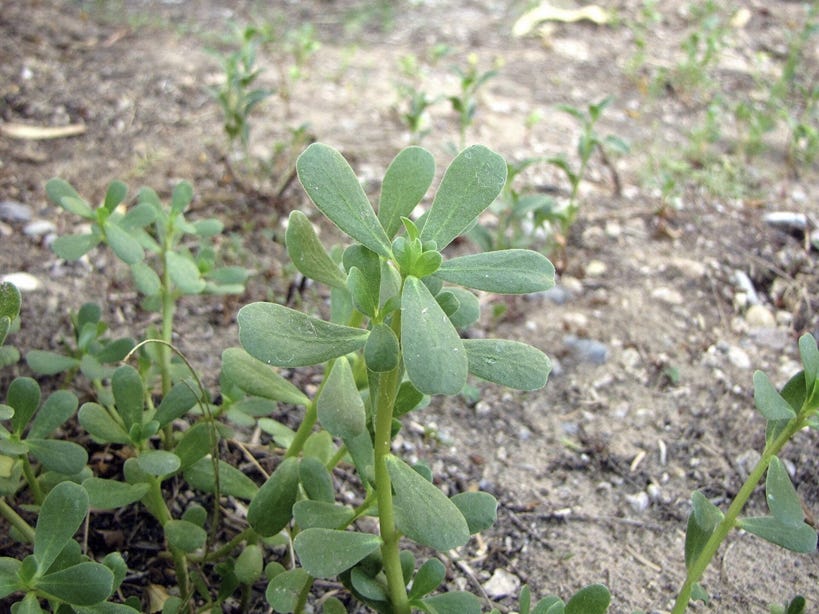
Purslane Portulaca oleracea is a remedy which has fallen out of use in the UK. Purslane is found in Culpeper and was widely used as a potherb in those days. In China it is called ma-chi-xian, Native Americans and Chinese see this as almost a ‘wonder herb’ and incorporate in their diets. It is listed by the World Health Organization as one of the most used medicinal plants and it has been given the term Global Panacea. In Iran and Pakistan it has a long continued use and is one of the most widely consumed vegetables in the world. TCM uses it for eczema, erysipelas, menorrhagia and snake bite. In Nepal the leaves and seeds are used treat cardiovascular complaints and circulatory diseases.
Purslane is widely distributed in temperate and tropical regions throughout the world. It is native to Persia, Africa and India and was introduced into Europe during 8th century by Arabs who used it as a salad herb. From Europe, the plant spread into the United States as well as Central and South America.
Because it is a succulent, Purslane can store water and survive drought, it has a taproot with numerous rootlets and can grow in poor soil and in very dry conditions. By switching from daytime C4 photosynthesis to nighttime CAM crassulacean acid metabolism, to conserve moisture, Purslane only opens its stomata to trap carbon dioxide at night. The carbon dioxide is converted first into malic acid and then during daylight into glucose for storage. This allows the plant to retain its water in the harshest circumstances.1 Truly Lunar behaviour!
This suggests Purslane could be a highly nutrient-dense crop to grow in areas of drought and degraded soil.
The leaves are fleshy and moist.
Herbs of the Moon are cool and moist and often grow on waste ground and in poor soil conditions as wild weeds.
Purslane can be eaten as a green vegetable or raw in salads, overcooked it can turn slimy (the mucilage). The seeds can be added to bread dough. Purslane, then is a useful functional food with great health benefits. It is fairly impossible to buy in the UK, so it will need to be home grown.
History
Purslane is mentioned by Dioscorides who recommended it for headaches, inflammation, burning conditions, wounds, and intestinal worms. He also notes that Purslane is an an-aphrodisiac.2
Herbs of the Moon cool the heat of Mars, which is the author of all hot, irritated and angry conditions (sex addiction would be included in this).
Hildegarde disliked Purslane because of its cooling and moistening properties3. In cold, Northern latitudes, Hildegarde lived near the Rhine, warming foods are best eaten except on the hottest days.
Herbs of the Moon cool and moisten the body, for Cholerics or people with a temporary acquired condition of heat and dryness. They are not suitable for Phlegmatics who need warming and drying foods as a general rule.
Culpeper says, Purslane
‘allays the heat of the liver, blood, reins [kidneys], stomach, hot agues [fevers] it stays hot and choleric fluxes of the belly [diarrhoea, dysentery], womens’ courses, the whites, and gonorrhoea, the distillation from the head, and pains therein proceeding from heat, want of sleep, or the frenzy.
Interestingly Ficino suggests the same as a treatment for insomnia4
Strew their beds with the leaves of cold plants. Soothe their ears with low songs and sounds. Often moisten their heads with these baths, namely water in which the following have been boiled: bits of poppy; lettuce; purslain; mallows; and leaves of roses, of grapevine, of willow, and of reeds; with the addition of camomile.
Notice the cooling herbs of the Moon in his mixture, Lettuce, Willow, Poppy and of Venus, Mallow and Rose.
Culpeper calls this ‘an overheated heart with breathlessness and anger’ and suggests Wild Lettuce and Sorrel and Borage in a mixture to calm the mind and bring on a restful sleep.
The herb bruised and applied to the forehead and temples, allays excessive heat therein, that hinders rest and sleep.
Culpeper considers Purslane on of the Lesser Cold Seeds, along with Wild Lettuce and Succory, to cools mucus membranes, especially in the urinary system and the lungs,
The seed is more effectual than the herb, and is good to cool the heat and sharpness of urine. The juice is for inflammations and ulcers in the secret parts, as well as in the bowels, and hemorrhoids, when they have excoriations in them.
Culpeper recommends making a distillation of Purslane, which sounds like a fantastic idea as it is so hard to come by,
The distilled water is preferred by many, and it works the same effects.; and applied to the eyes it takes away inflammation in them.
Purslane as an anti-inflammatory as well as its high mucilage content provides and excellent remedy for the lungs where lubrication is needed, Culpeper adds
taken with sugar and honey, helps an old and dry cough, shortness of breath, and the phthisic,[wasting illness of the lungs like TB or chronic asthma] and stays immoderate thirst.
Science
Probably because of its popularity in TCM there has been a lot of research into Purslane5
To summarise:
Omega 3:
Purslaine contains the highest amount of Omega 3 in any plant6 and was highest in the leaves (Petropoulos). Omega 3 plays an important role in both the prevention and treatment of cardio vascular disease, hypertension, diabetes, arthritis, and other inflammatory and autoimmune diseases (Shahidi). Studies have shown an effect on fasting blood sugar and it may be useful in Type 2 and Type 3 Diabetes (dementia). (Shahidi) the omega-3 fatty acid is called alpha-linolenic acid (ALA). This fatty acid has been associated with weight management benefits, as research suggests it may help regulate metabolism and reduce fat accumulation in the body. [or deal with inflammatory response which may have a role in obesity].
Antioxidants:
Purslaine contains high levels of antioxidants7 including; Vitamin A which protects the eyes as well as stimulates the immune system, it supports healthy cell division. Also, Beta-carotene which turns into vitamin A in the body and reduces free radicals postulated to reduce the risk of developing cancer. Vitamin C (this would be the fresh plant) which supports immunity, keeps blood vessels and collagen healthy and heals wounds. Purslane contains Glutathione also said to have cancer prevention properties, the leaves contain more glutathione than spinach. It contains Melatonin which promotes sleep8
or as Culpeper says
applied to the forehead and temples, [it] allays excessive heat therein, that hinders rest and sleep.
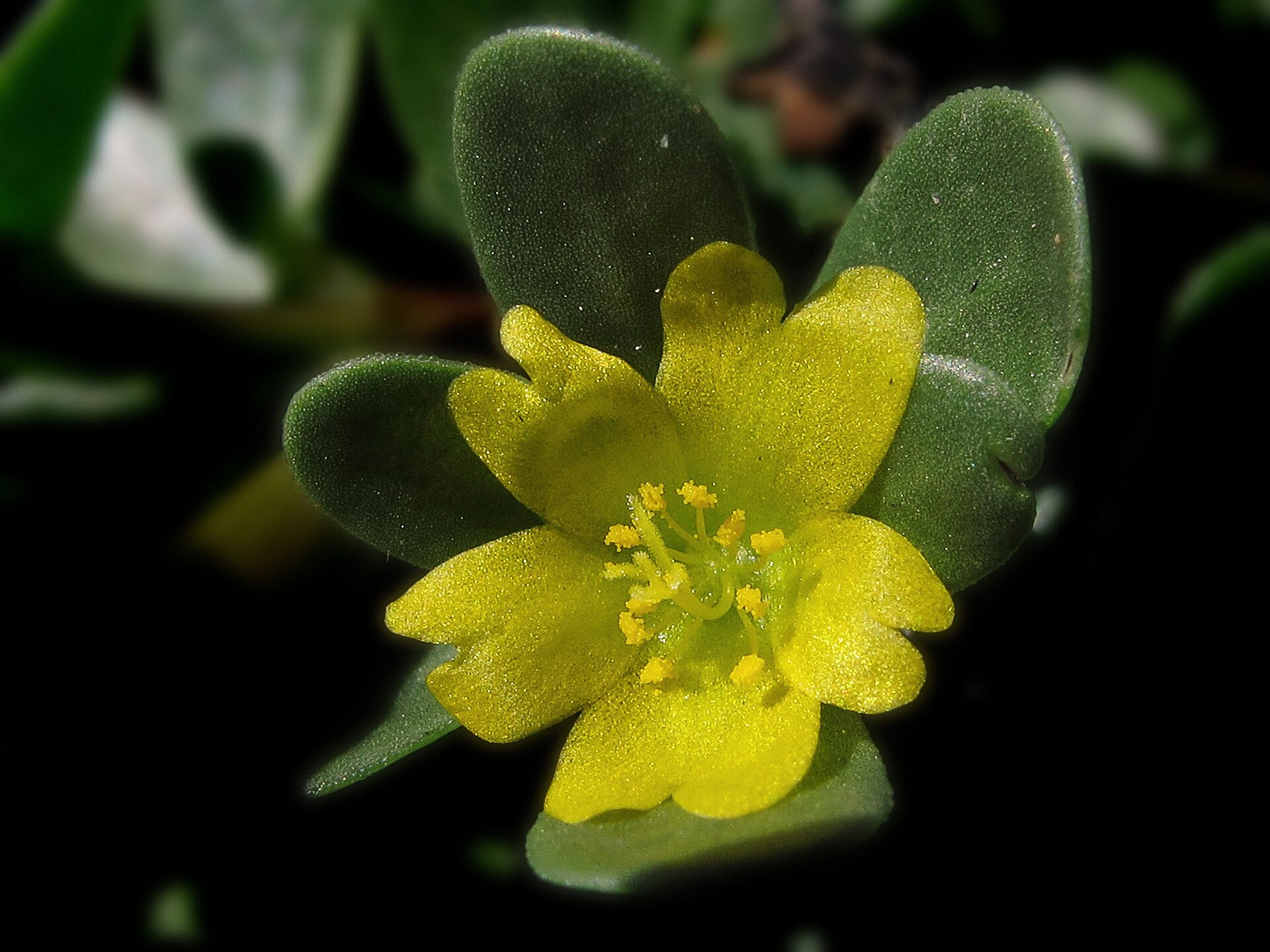
Melantoin also reduces inflammation, supports the immune system, and is hypotensive. Purslane contains Betalain the natural substance that gives the stems their reddish colour have powerful antioxidants known for their immune-boosting properties giving antiviral, antibacterial, and anti-fungal qualities. Betalains help neutralize harmful free radicals in the body, reduce oxidative stress and support overall immune health.9
Herbs of the Moon, by virtue of their coldness and moistness often provide a protective layer to mucus membranes of the lungs, stomach, bladder and mouth.
Purslane is rich in folate which helps in the formation of DNA and RNA, supports cell division, and is crucial for producing healthy red blood cells. It also plays a role in breaking down homocysteine, an amino acid that can be harmful in high amounts, thus contributing to overall cardiovascular health.
Supplementing with vitamin B2 rich food has been shown to be a natural headache remedy and to reduce the frequency of migraines, plus it may help decrease symptoms and pain during a migraine, as well as to shorten the duration10. Migraine can follow stress and a ‘hot brain’ as well as ‘anger attacks’, all of which are Choleric symptoms.
The Moon rules the physical brain [rather than thinking] and also the left eye in men and the right eye in women.
Minerals:
Purslane contains high amounts of Calcium, Manganese and Magnesium (Nemzer). About 60% of the Magnesium in the body is stored in the bones and helps produce bone-building cells and controls a hormone that helps your body use calcium. These minerals improve your skeletal health and prevent complications from osteoporosis and aging and accelerate the repair of broken bones.
Purslane also contains Phosphorus, Potassium, Sodium, Zinc. Iron and Copper stimulate the production of red blood cells. These minerals are important for boosting circulation, which means more oxygen being delivered to essential parts of the body. It contains Selenium important for thyroid health and with Zinc is important for immune cells in the body and can reduce severity and duration of infections and prevent them.11
Magical Uses
Herbs of the Moon, as we have discovered, help to cool the brain and bring on sleep. It follows that they are dream herbs.
In Greek Magical Papyri, which hid the true names of their remedies, Purslane is called its opposite, ‘Blood of Aries’ 12 This suggests the cooling, calming and softening aspect of Purslane, which calms, frenzy, anger, a heated liver, often the source of rage, a heated brain, causing insomnia and mania. Purslane would be included in spells to deflect angry people and situations, and as protection from violence.
Caution
Like most things avoid in the first trimester of pregnancy. Also Purslane may exacerbate kidney stones as it contains oxalates. Contact your health provider for guidance.
R.C. Ferrari, B.C. Cruz, V.D. Gastaldi, et al. “Exploring C4–CAM plasticity within the Portulaca oleracea complex.” Scientific Reports 10, 14237 (2020). https://doi.org/10.1038/s41598-020-71012-y. In https://worldsensorium.com/viriditas-musings-on-magical-plants-portulaca-oleracea/#sdfootnote11sym.
Dioscorides Pedanius, T. A. Osbaldeston, and R. P. A. Wood, De Materia Medica: Being an Herbal with Many Other Medicinal Materials: Written in Greek in the First Century of the Common Era: a New Indexed Version in Modern English (Johannesburg: IBIDIS, 2000), 272-5.
Hildegard, Hildegard Von Bingen’s Physica: The Complete English Translation of Her Classic Work on Health and Healing, trans. Priscilla Throop, (Rochester: Healing Arts Press, 1998) 44.
Carol V. Kaske and John R. Clark, eds. trans., Marsilio Ficino / Three books on life; A Critical Edition and Translation with Introduction and Notes, (Binghamton: Center for Medieval and Early Renaissance Studies, State University of New York at Binghamton, 1989) 157-8.
Nemzer, F. Al-Taher, N. Abshiru, Phytochemical composition and nutritional value of different plant parts in two cultivated and wild purslane (Portulaca oleracea L.) genotypes, Food Chem. 320 (2020) 126621. https://doi.org/10.1016/j.foodchem.2020.126621.]
F. Shahidi, P. Ambigaipalan, Omega-3 polyunsaturated fatty acids and their health benefits, Annu. Rev. Food Sci. Technol. 9 (2018) 345-381. https://doi.org/10.1146/annurev-food-111317-095850
S. Petropoulos, A. Karkanis, A. Fernandes, et al., Chemical composition and yield of six genotypes of common purslane (Portulaca oleracea L.): an alternative source of omega-3 fatty acids, Plant Foods Hum. Nutr. 70 (2015) 420-426. https://doi.org/10.1007/s11130-015-0511-8]
https://www.sciopen.com/article/10.26599/FSHW.2022.9250203
Consuming 43 gram of Purslane offers 0.86 mg of Iron,9 mg of Vitamin C, 29 mg of Magnesium,0.13 mg of Manganese,0.049 mg of Copper,212 mg of Potassium, 0.048 mg of Vitamin B2, 28 mg of Calcium and 19 mg of Phosphorus. https://www.healthbenefitstimes.com/purslane/
https://www.webmd.com/diet/health-benefits-purslane
https://www.webmd.com/diet/health-benefits-purslane
https://www.healthbenefitstimes.com/purslane/
https://thepowerofplants.info/purslane-benefits/
Richard Folkard, Plant Lore, Legends, and Lyrics : Embracing the Myths, Traditions, Superstitions, and Folk-lore of the Plant Kingdom, (London: S. Low, Marston, Searle, and Rivington, 1884) 508.